A 16th century lawyer's mid-life turn to his library
in Books
In the year of Christ 1571, at the age of thirty-eight, on the last day of February, anniversary of his birth, Michel de Montaigne, long weary of the servitude of the court and of public employments, while still entire, retired to the bosom of the learned Virgins [the Muses], where in calm and freedom from all cares he will spend what little remains of his life now more than half run out. If the fates permit, he will complete this abode, this sweet ancestral retreat; and he has consecrated it to his freedom, tranquility, leisure.
This was the Latin inscription on the wall of a side-chamber of Montaigne’s library where he dedicates his rest of the life reading, writing and eventually becoming the reluctant Mayor of the city of Bordeaux.
The works Montaigne produced made the philosopher Maurice Merleau-Ponty call him a writer who put “consciousness astonished at itself at the core of human existence.”
For us 21st century readers, Montaigne is widely credited for popularising ‘essays’ as a literary genre so his retreat into the bosom of the learned Virgins turned out to be quite useful spilling over to the later centuries.
Fun fact: His birthdate served as the basis for establishing February 28th as the National Essay Day in United States
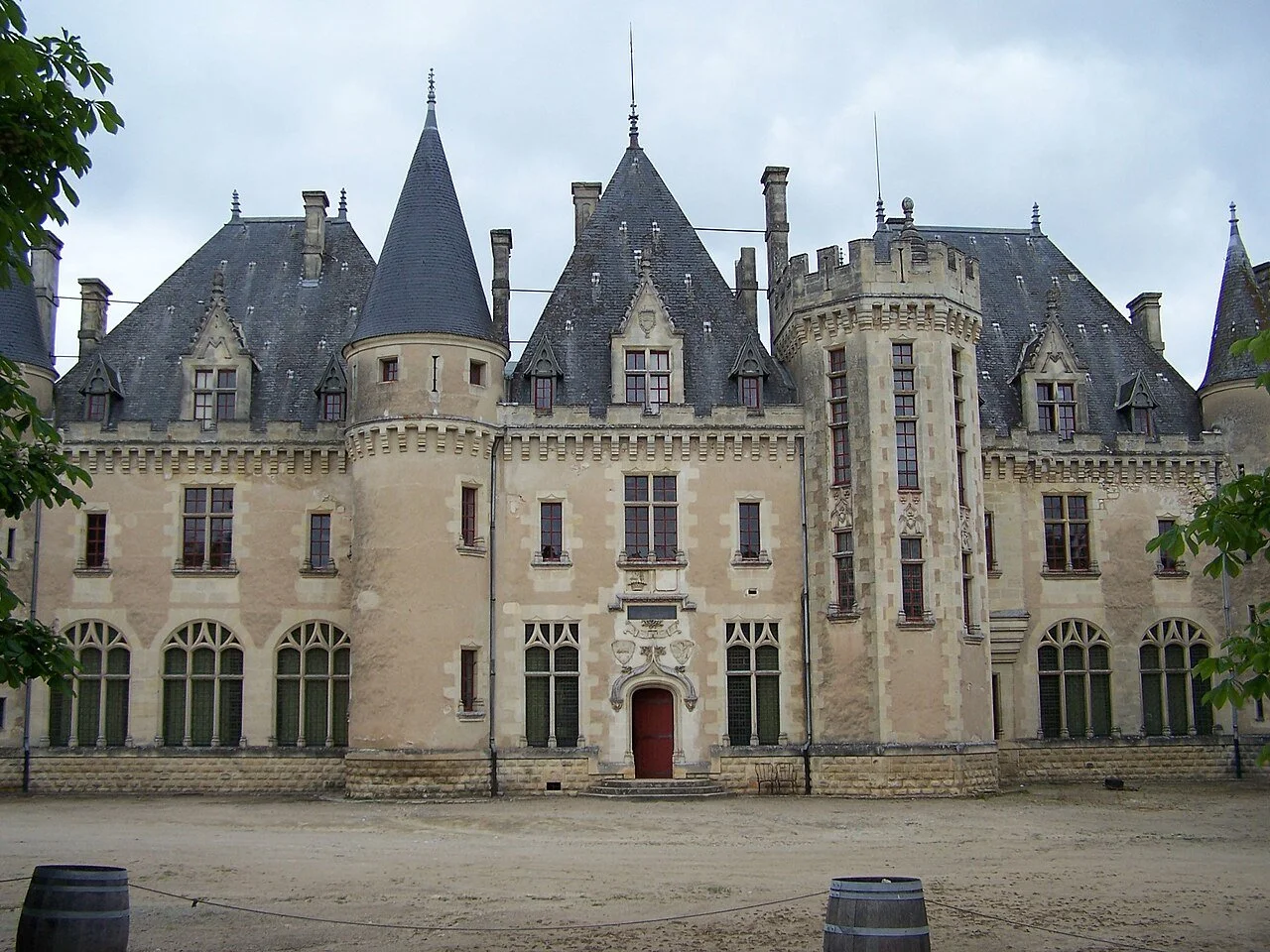
Château de Montaigne, a house built on the land once owned by Montaigne's family. His original family home no longer exists, although the tower in which he wrote still stands.
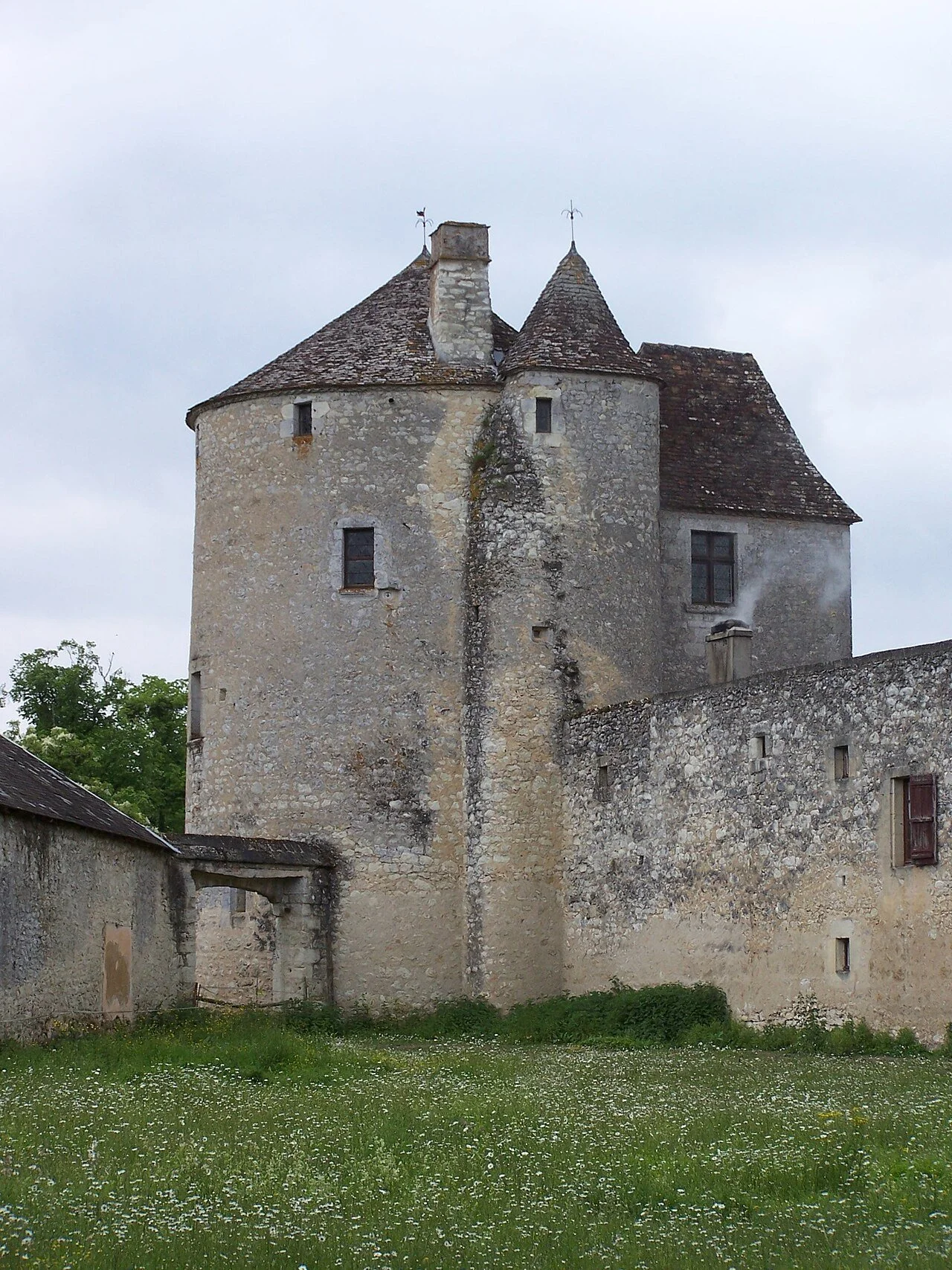
The Tour de Montaigne (Montaigne's tower), where Montaigne's library was located, remains mostly unchanged since the sixteenth century.
Having committed himself to a life of reading and contemplation, Montaigne picked a perfect corner of his estate to be his library. He chose one of the two towers at the corner to be his all-purpose retreat while the other was reserved for his wife.
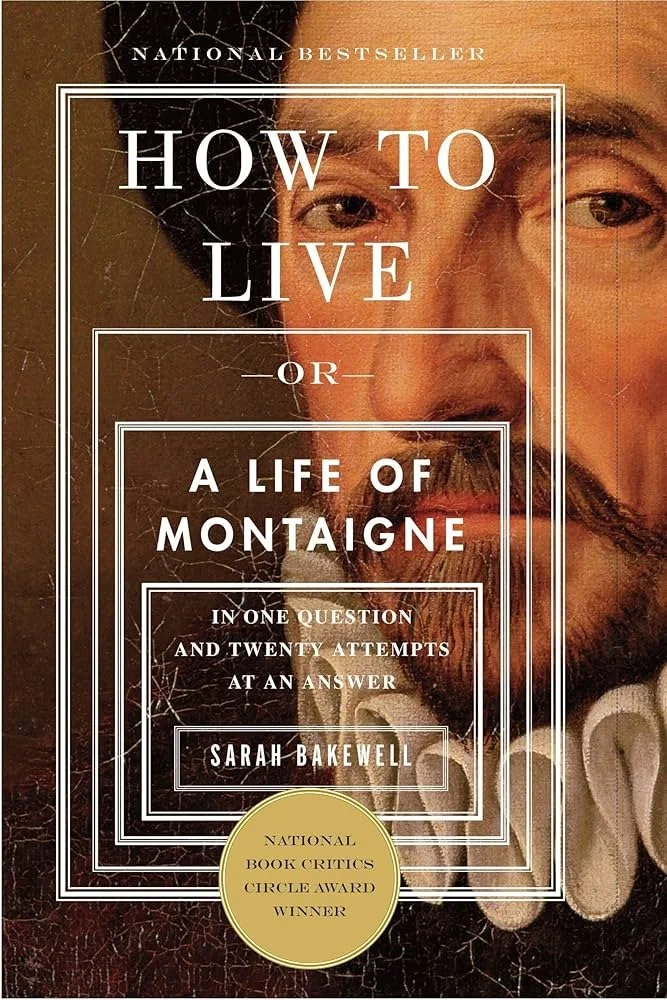
From the deeply and lovingly researched book by Sarah Bakewell
One can climb the steps today as a tourist and step into the same room that Montaigne would have spent days and nights in. One might not find the murals on the walls or any underfoot covering but that wasn’t the most splendid part of the room anyway.
The most striking feature of the main library room, when Montaigne occupied it, was the fine collection of books, housed in five rows on a beautiful curving set of shelves. The curve was necessary to fit the round tower, and must have been quite a carpentry challenge. The shelves presented all Montaigne’s books to his view at a single glance: a satisfying sweep. He owned around a thousand volumes by the time he moved into the library..
Also around the room were Montaigne’s other collections: historical memorabilia, family heirlooms, artifacts from South America. Of his ancestors, he wrote, “I keep their handwriting, their seal, the breviary, and a particular sword that they used, and I have not banished from my study some long sticks that my father ordinarily carried in his hand.”
Decorated in the ornamented style typical of French Mannerism style, the paintings and elaborate borders filled "every inch" of the available surface, including "ceiling beams, and ceiling." One of the central theme of the paintings gathered in the space seems to have been nudity, a question metaphorically at the heart of the writing project of the Essays.
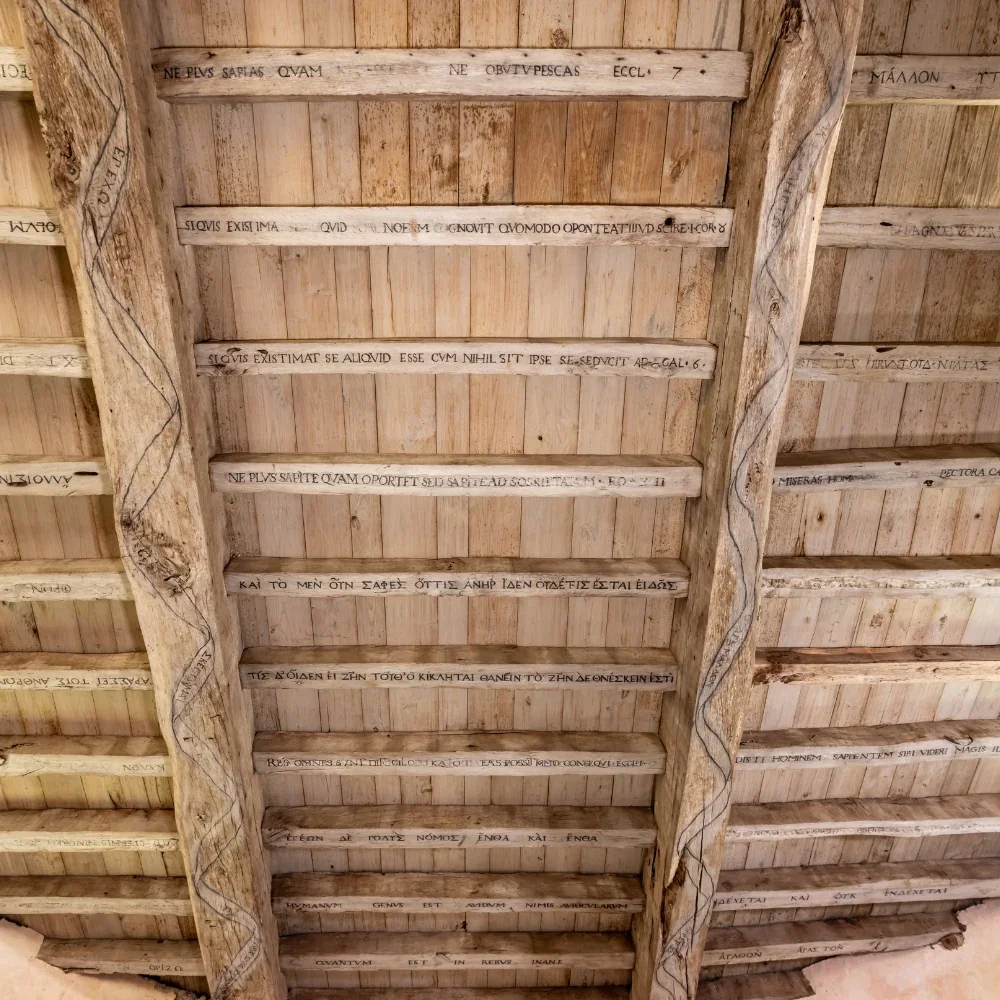
Going further than the murals, he had the roof beams painted with quotations, mostly classical. As a daily reminder of his commitment to literature perhaps or perhaps because it was the interior design fashion that time.
“Solum certum nihil esse certi
Et homine nihil miserius aut superbius
Only one thing is certain: that nothing is certain
And nothing is more wretched or arrogant than man”
How can you think yourself a great man, when the first accident that comes along can wipe you out completely? (Euripides)
〰️
There is nothing more beautiful life than that of a carefree man; Lack of care is a truly painless evil (Sophocles)
How can you think yourself a great man, when the first accident that comes along can wipe you out completely? (Euripides) 〰️ There is nothing more beautiful life than that of a carefree man; Lack of care is a truly painless evil (Sophocles)
From the Montaigne estate website.
The beams would have served Montaigne as a daily reminder to follow the footsteps of Seneca who urged his fellow Romans to retire in order to “find themselves”.
A note on Isaac Newton's writing practice
With two and a half pence his mother had given him, Isaac was able to buy a tiny notebook, sewn sheets bound in vellum. He asserted his ownership with an inscription: Isacus Newton hunc librum possidet. (Latin for "Isaac Newton possesses this book")
Over many months he filled the pages with meticulous script, the letters and numerals often less than one-sixteenth of an inch high. He began at both ends and worked toward the middle. Mainly he copied a book of secrets and magic printed in London several years earlier: John Bate’s Mysteryes of Nature and Art, a scrap book, rambling and encyclopedic in its intent.
He copied instructions on drawing. “Let the thing which you intend to draw stand before you, so the light be not hindered from falling upon it.”
“If you express the sunn make it riseing or setting behind some hill; but never express the moon or starrs but up on necessity.”
He copied recipes for making colors and inks and salves and powders and waters.
“A sea colour. Take privet berries when the sun entreth into Libra, about the 13th of September, dry them in the sunn; then bruise them and steep them.”
Colors fascinated him. He catalogued several dozen, finely and pragmatically distinguished: purple, crimson, green, another green, a light green, russet, a brown blue, “colours for naked pictures”, “colours for dead corpses”, charcoal black and seacoal black.
He copied techniques for melting metal (in a shell), catching birds (“set black wine for them to drink where they come”), engraving on a flint, making pearls of chalk.
Living with Clarke, apothecary and chemist, he learned to grind with mortar and pestle; he practiced roasting and boiling and mixing; he formed chemicals into pellets, to be dried in the sun. He wrote down curses, remedies, and admonitions:
Things hurtfull for the eyes
Garlick Onions and Leeks…Gooing too suddaine after meals. Hot wines. Cold ayre…Much blood-letting…dust..ffire..much weeping..
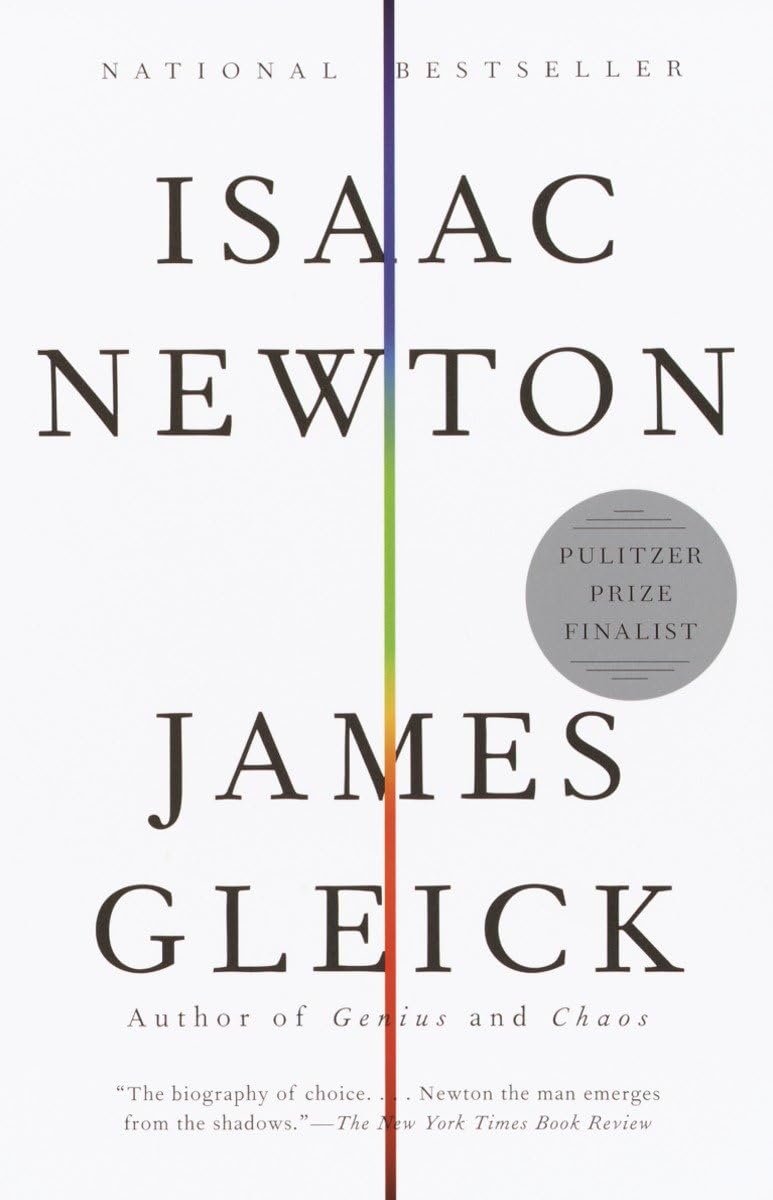
A short yet illuminating biography of Isaac Newton by a brilliant science writer, James Gleick
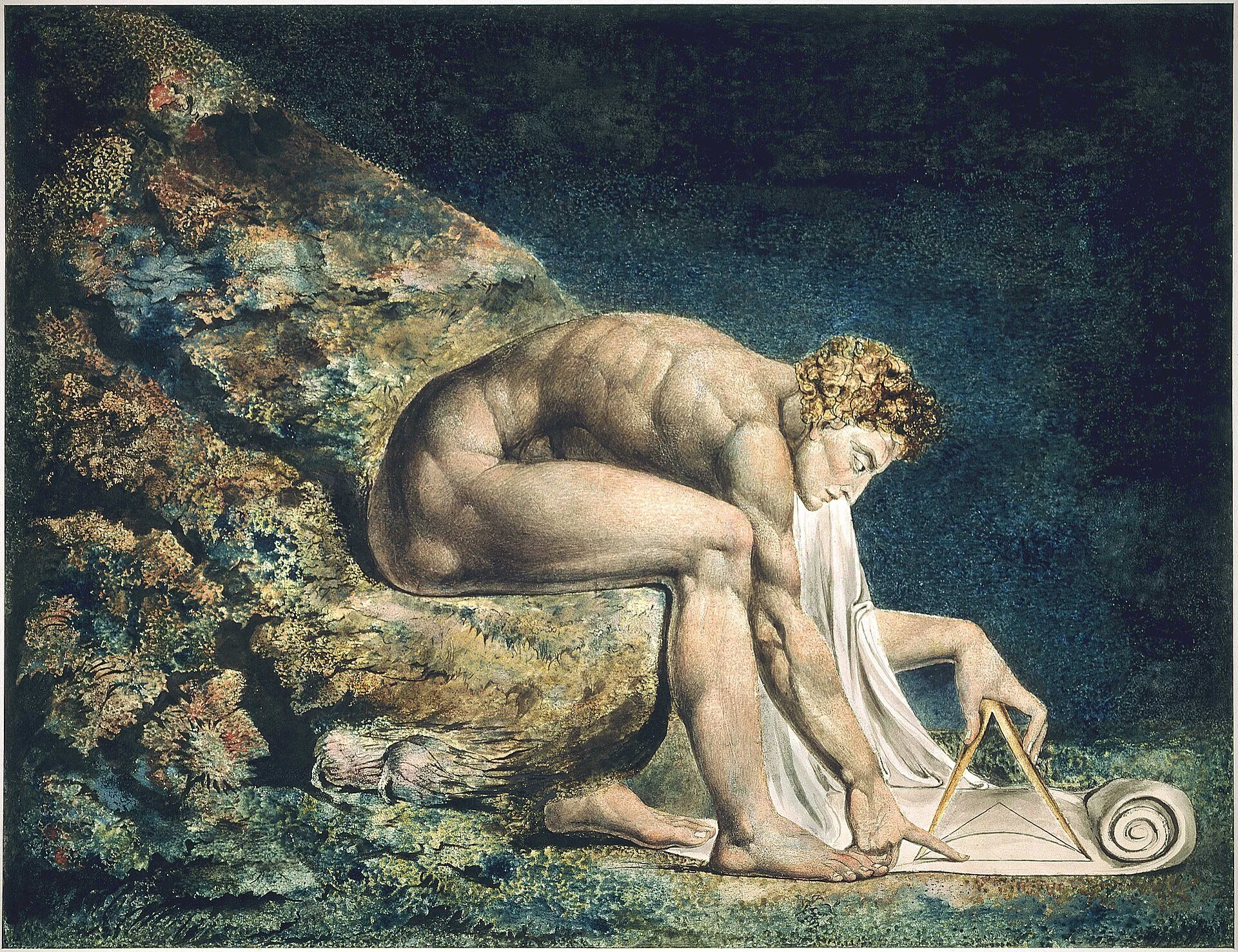
Newton is a monotype by the English poet, painter and printmaker William Blake first completed in 1795. Isaac Newton is shown sitting naked and crouched on a rocky outcropping covered with algae, apparently at the bottom of the sea. His attention is focused upon diagrams he draws with a compass upon a scroll
Listening to this while working
in Music
[Read today] Approaches to writing two-sentence journal entries
I'm a technical writer by day (a great career path if you want to pursue it), which means that work days are often spent tethered to my desk while I scrutinize documents on a computer monitor. When my eyes need a break from the screen – or my brain needs a respite from whatever task I'm completing – I spend a minute or two on my journal.
Read this detailed Approaches to writing two-sentence journal entries
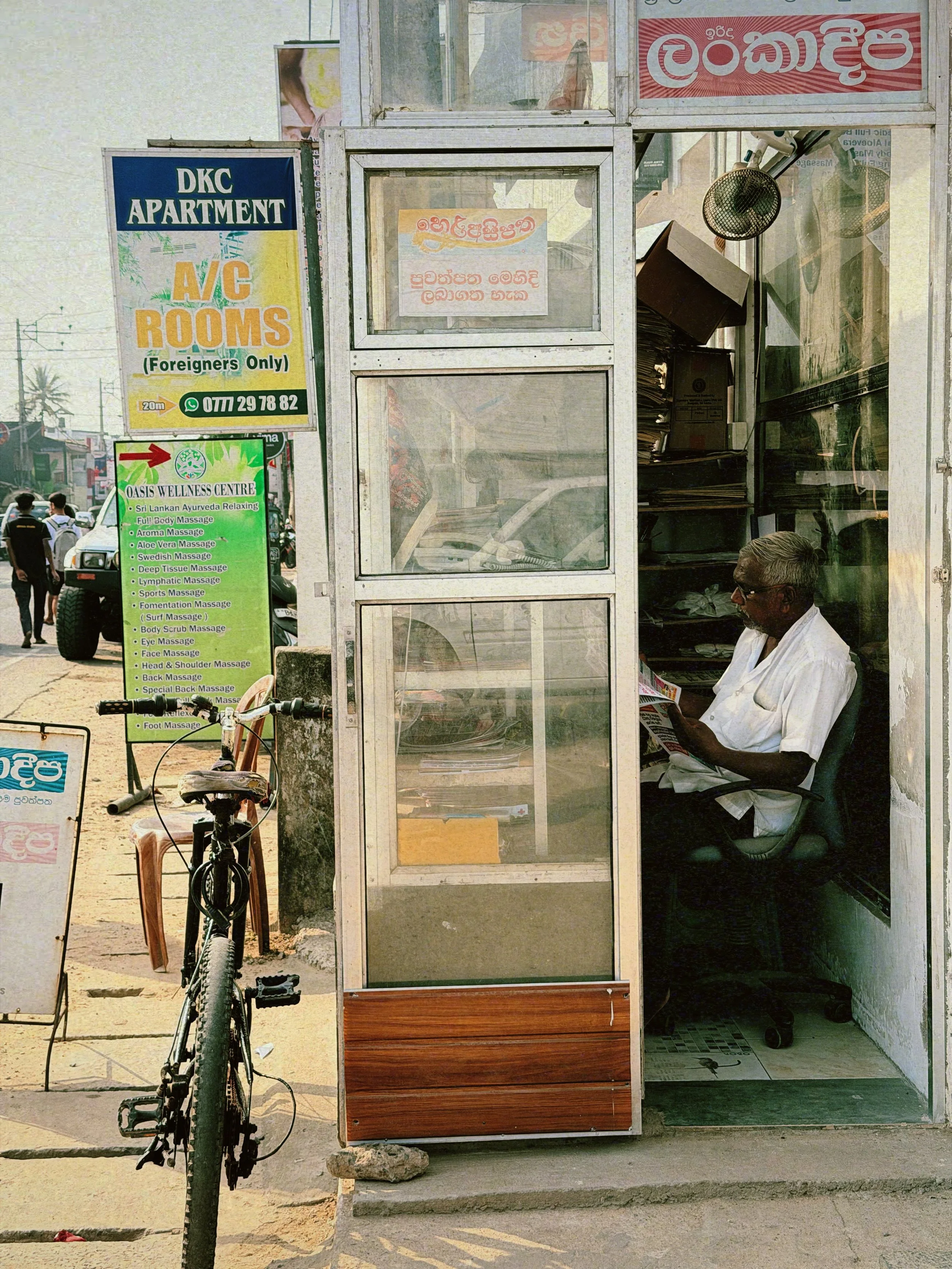
Sitting inside the box, Ahangama, Srilanka
Note: It was a hot day and I crossed this box of a newspaper stand everyday. I could sense that for someone sitting inside, it would be slightly uncomfortable but this man was engrossed in reading his newspaper.
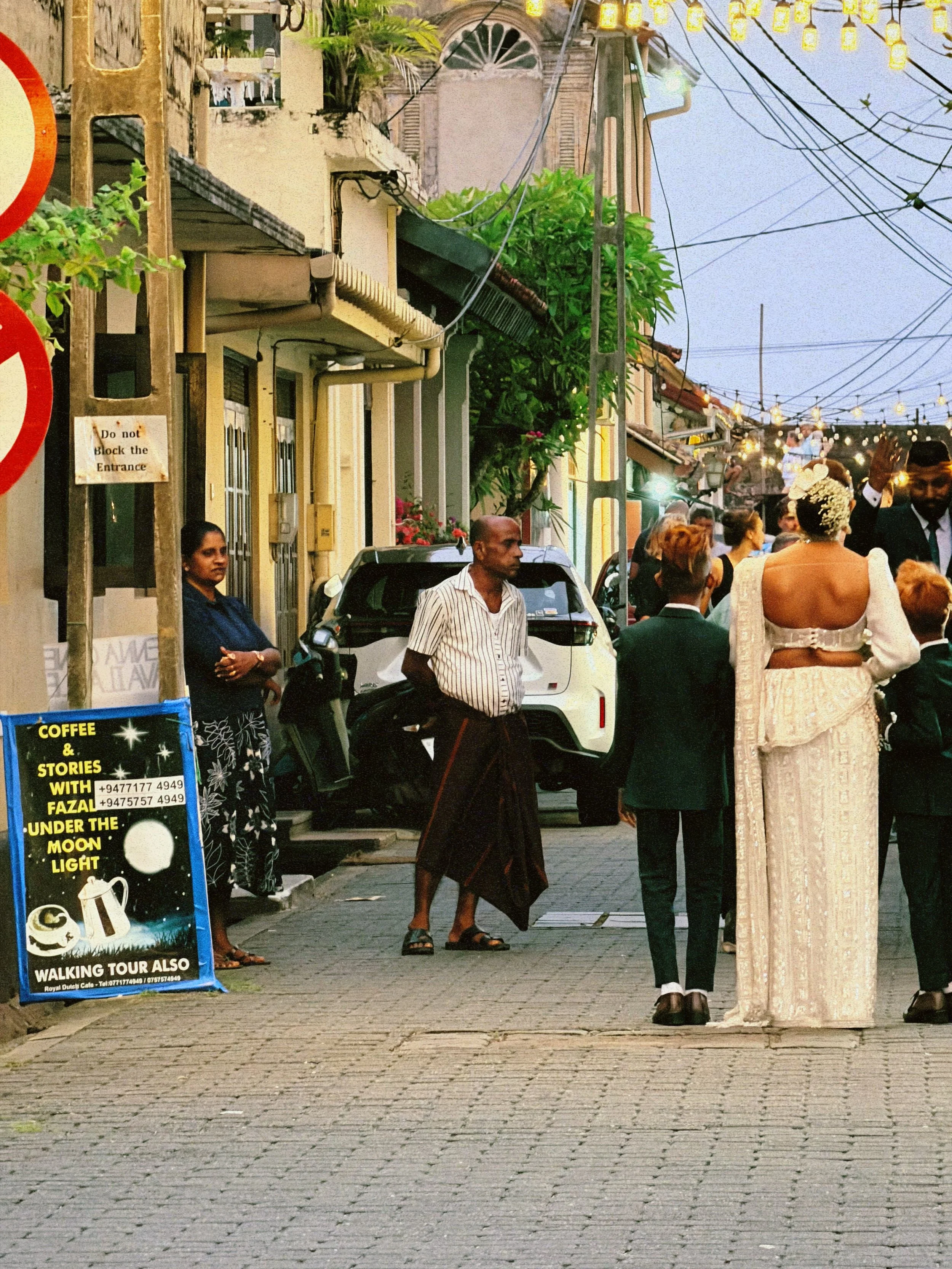
A wedding shoot at dusk
Note: Walking on the streets of Galle, I saw this wedding shoot with a resplendent bride. All the passers-by had a smile pasted on their lips witnessing this moment.
Two monks on the streets of Galle, Srilanka.
Note: I had really liked the striking orange and deep red of the robe against the gray cemented road. Later, I realised there was a road sign for cars that matched the colours on their robes.
Weekly Notes: 3/52
in Weekly Notes
Happy to report that apart from a slight knee pain flare up this week, this week continued its streak of being a quiet productive week for me. Work at the studio, art, incorporating some decent sized walks and a lot of meeting with friends. By this Sunday, I was quite sapped and spent many many hours just in bed.
Last week, I made a Replit app to visualise the movement of dancers in space. I wanted to see how it would look on a dancer performing Aigiri Nandini and spent some time tweaking the settings to visualise this.
2. On Tuesday, it was Lohri a midwinter folk and harvest festival that marks the passing of the winter solstice and the end of winter. It is a traditional welcome of longer days and the sun's journey to the Northern Hemisphere. Avinash, Varsha, Gouri, Rasagy, Garima and Kenneth came over and there was much dancing around the bonfire on the terrace. Much of the dancing was quite funny and I relegated to my bed at sharp ten completely spent.
3. On Wednesday, we also had Noopur’s birthday dinner at Matsuri - the Japanese restaurant attached with the Chancery Pavillion. She is a big Japanophile and so it was a no brainer for her birthday celebration at a Japanese place. I wasn’t too happy with the vegetarian dishes but the shared laughter made up for any blandness in the food.
4. On Thursday, it was Pongal - a multi-day Hindu harvest festival celebrated by Tamils. The festival is celebrated over three or four consecutive days, which are named Bhogi, Thai Pongal, Mattu Pongal and Kaanum Pongal, beginning on the last day of the Tamil calendar month of Margazhi. Thai Pongal is observed on the first day of the Tamil calendar month of Thai and usually falls on 14 or 15 January in the Gregorian calendar.
According to tradition, the festival marks the end of winter solstice, and the start of the Sun's six-month-long journey northwards called Uttarayana when the Sun enters Capricorn. It is dedicated to the solar deity Surya and corresponds to Makar Sankranti, the Hindu observance celebrated under various regional names across the Indian subcontinent.
At the studio and at home, it was a holiday and I went to eat some butter idli at Rameshwaram in the morning after my walk.
It was also Avinash’s last day at his current workplace and we went for dinner and beer at Toit. I have seen his journey for over a decade now and his work ethic is always a source of deep inspiration for me. I wore a cute pinafore that Noopur had gifted me that felt really cute :)
5. On Saturday, Pooja released her book on Indian Street Lettering at the Champaca and after a full day of painting tiles at the studio and chatting with Rashmi and Gouri, I made it to the bookshop to hear her conversation on how she put together the book, her snippets of conversation with street letterers were enchanting and honestly having seen her entire journey of documentation for years now, I came back quite inspired as well.
6. Spent Sunday grabbing some real good coffee from Still and dipping into the book I am reading this week.
That’s it from my week!
Weekly Notes: 2/52
in Weekly Notes
This week was a quiet productive week for me and this is how I’d like my days and weeks to go. Doing leaps at work, having the mental energy to create personal work and then to have a great book hold my hand is the very definition of paradise for me.
I was able to do four inversions in my yoga class this week. Handstand, head stand, shoulder stand and a variation of the scorpion pose. All of this is heavily assisted by my yoga teacher but after four months, I am finding it freeing to just hang upside down. I need to work constantly on the weight distribution but the I love the tiny improvements.
During this week, I was able to use some spare time to work on a 3D visualisation app on Replit where I drew trail lines on Indian dancer movements. I found that once you start using a vibe coding tool like Replit, the quick visual output becomes addictive and the pace of experiments keep increasing and so I also spent 2-3 days tweaking the output.
This entire week, a small group of college friends shared their outfits of the day and this gave me a cute reason to dress up a little everyday.
Continuing my crafting streak this week, I was also able to spend half a day painting tiles for a very special project. I am getting a lot of help from Rajvi and she is guiding me on colours, helping with glazes and will be undertaking the final step of glazing and firing them.
This week, I was able to make two narrative illustrations and I felt like I was able to communicate the essence of what I was trying to say in a very minimalistic and analogous style. I feel I want to continue this series in a lot of other mediums as well.
6. On Saturday, my cousin-grandmom and aunt came for lunch and I was able to hear them talk about my grandfather who passed away when I was quite little. Hearing about how kind and gentle soul he was made me think of him and we spent an afternoon reminiscing about my grandparents. That evening, I went to watch Dhurandhar with Aditya and Pallavee and found the movie engrossing enough that I didn’t feel four hours of screen time as much as I was fearing.
7. I also started work on Escape Velocity Grants and would write more about it in the next issue.
All things considered, a gentle yet consistent week of work!
From the airplane window
A drawing made today
Weekly Notes: Week 1/52
First week of the new year and I am not making too many new resolutions this year. Whatever habits I started accruing the last year would compound better if I am able to stick with them this year.
This week leading up to today was surrounded by friends and family and therefore, they are going to feature in this set of weekly notes for me.
I was in Hanoi leading up to the last days of the year and for most part of the trip, I was down with fever and a bad throat rash. My cold turned me towards soups and teas and I couldn’t have even a single glass of Vietnamese cold coffee. However, the old quarter of Hanoi was so full of colour and picturesque that I picked my phone camera and engaged in some very intentional photography.
On the flight back, I watched Audrey’s Children, a beautiful biopic on the pediatric oncologist, Dr. Audrey Evans who brought the survival rates of children suffering from neuroblastoma from 20% to 85% with her work.
With Shobhit and Nishita around, the last days of the year went by in a warm embrace of easy smiles and chatter. A lot of coffees were had and on 31st night, I wore my best pajama set and gave in to the din that was our living room.
Between 30th and 31st December, was able to take a couple of hours to sit by myself and write my yearly reflection and also plan the year ahead since that was quite important to do and I am really happy I got to do that. I am realising that a solid block of three hours is all I need to return to myself either by drawing or writing or thinking and I am really hoping that I don’t lose this thread this year.
Nishita runs a podcast and a consulting co. for creative businesses and we recorded a short episode on my experience of building Anomalie Tattoo Co. It was fun to record a podcast in pajamas (I think pajamas are an emergent theme for me this year)
I was also very happy to have finally met Gunjan - my school friend who I know since pre-kindergarten. She is an extremely inspiring artist and now a restauranter and we met after two decades!
Finally, I shook off my inertia and made way to meet my grandmom and cousin an hour away from where we live. Sushant is a contemporary artist and it’s always a deep pleasure to talk with him on art, galleries, making a living as an artist in a completely unpretentious breath.
A bubble's shadow
in Travel
When I asked ChatGPT for proverbs by different cultures on bubbles as a metaphor, I got a list of top ten. I am listing a few down below:
“Human life is a dream, and glory is like a bubble’s shadow.” (Chinese)
“A bubble’s dream.” (Japanese)
“The world is like a bubble.” (Persian)
“Man is but a bubble.” (Greek philosopher, Anacharsis)
Quite evidently, across civilisations and cultures, we’ve witnessed this fragile child of soap and water and elevated it to take on the great burden of being the metaphor for life itself.
Looking back, it’s obvious that the little bubble gets this credit of being compared to a magnitude of time that is the human life. The bubble starts its life almost accidently. A thin film of soapy water stretching out helped by the dual nature of soap molecules - one end attracting itself to water and the other repelling it. Imagine the poetry!
This attraction and repulsion stabilises the film and when air is blown, it stretches itself into a sphere and a bubble is born.
One witnesses this birth in awe and wonder. The physicality of blowing air from one’s lungs, watching the soapy film gently accommodating all the blown air and stretching in all directions before changing its very dimension. As soon as our baby bubble is born, light from the universe comes to speak to it and that’s how one sees the sequence of a rainbow playing out right in front of our eyes.
In the colour progression of a bubble, this is how it goes:
Greenish/yellowish for a 1 micron thick film.
Bright blues, greens and reds swirling around in rainbow-like bands for thicknesses of ~500-700 nm.
Pinks, purples and deep blues with thin film of ~200-400 nm.
Black or transparent for extremely thin film < 50 nm.
The black (or transparent) appearance is when the film has become so thin that its unable to reflect visible light. At that moment, at very top of the bubble appears the “death spot”.
The bubble bursts shortly after.
Here is a handy diagram of the colour spectrum in a bubble’s lifetime.
The image from: https://soapbubble.fandom.com/wiki/Evaluating_Bubble_Color
In a matter of mere seconds, one witnesses the improbability of birth, the play of gorgeous light followed by its death. So fast is this cycle played out that one finds oneself in a state of emotional suspended animation because there simply hasn’t been the time to react.
Bubbles are beautiful because their ephemerality is faster than the grip of our consciousness.
Now one can simply dip the bubble ring back in soapy water and blow out more bubbles but one does grieve the passing of a beautiful, resplendent bubble a little bit, isn’t it?
This grieving took the shape of a collective sigh at the packed auditorium where Louis Pearl also known as the “Pope of Soap” was performing his sold out show “The Amazing Bubble Man” at the Edinburgh Fringe, 2025.
In a 60-minute show, Louis - now a 67 year old was blowing bubbles and he had been doing this for 30 years now. During the collective gasping and sighing of the audience (that seemed to have all of Edinburgh’s little ones in attendance), my mind found the time to shift between the bubbles and the artist.
A wikipedia entry reveals Louis turned away from pathology and medicine after viewing the cadaver of ‘philosophical entertainer’, Alan Watts. Another death reference.
It was while studying local aquatic species that entailed scuba diving, he became fascinated with the bubbles he was exhaling and began to look at them with scientific curiosity.
“In a college art class, during a mandated two-minute performance he blew into a giant bubble using an Impala horn which would serve as inspiration for his future career.”
Louis Pearl stood on stage explaining the science of bubbles, Bernoulli’s principle, the life cycle of a bubble in its colour shifts, his story of how he came to be blowing bubbles for a career.
All this while, his hands were busy making huge, most beautiful bubbles I had seen in my life. He enveloped little kids with giant bubbles, made a mama bubble and blew tens of bubbles inside a make-believe bubble belly. He made a bubble caterpillar and taught the audience how to make bubbles with common items found in homes.
For those 60 minutes, the entire audience was in the palm of his hands. The gasps of seeing those huge, shiny iridescent globules of rainbow light and the signs when each of them burst was the only music in the performance.
I left the auditorium in deep awe - both at the artist and the medium. It takes a truly great artist to elongate an ephemeral bubble of a life and ascend it to heavens, doesn’t it?
Things to Do in the Belly of the Whale
in Reads
Things to Do in the Belly of the Whale
Dan Albergotti
Measure the walls. Count the ribs. Notch the long days.
Look up for blue sky through the spout. Make small fires
with the broken hulls of fishing boats. Practice smoke signals.
Call old friends, and listen for echoes of distant voices.
Organize your calendar. Dream of the beach. Look each way
for the dim glow of light. Work on your reports. Review
each of your life’s ten million choices. Endure moments
of self-loathing. Find the evidence of those before you.
Destroy it. Try to be very quiet, and listen for the sound
of gears and moving water. Listen for the sound of your heart.
Be thankful that you are here, swallowed with all hope,
where you can rest and wait. Be nostalgic. Think of all
the things you did and could have done. Remember
treading water in the center of the still night sea, your toes
pointing again and again down, down into the black depths.
Watch: An artist tries the creative routine of Tove Jansson
Today’s lunch time watch.
““There are always plenty of rivals to our work. We are always falling in love or quarreling, looking for jobs or fearing to lose them, getting ill and recovering, following public affairs. If we let ourselves, we shall always be waiting for some distraction or other to end before we can really get down to our work. The only people who achieve much are those who want knowledge so badly that they seek it while the conditions are still unfavorable. Favorable conditions never come.”
Weekly notes: 28/52
in Weekly Notes
While I’ve started this weekly dispatch with a quote on unfavourable conditions, in reality, this week was spent at one of the most favourable, conducive places to work, to think and to plant bulbs in one’s intellectual garden. I had planned a week-long summer course in narrative writing at Oxford and this was the heady week of learning, making new friends and looking at the world with fresh eyes.
Sunday was the first class at Oxford and I got introduced to Natalie Goldberg’s Rules of Freewriting. I’ve known Natalie’s work through reading her book The Great Failure so I knew her name and had read her work, but this exercise was a structure for liberation.
While for my drawing practice, I have now started to carve out time and a space (dining table mostly) but writing as a practice hasn’t received the same affection. My mindset was that writing would need blocks of atleast 4-5 hours to produce something of significance and anything less than that time isn’t even worthwhile attempting. Wrong.
I was proved wrong on the very first day of the course. One needs 5 minutes to fill up a page. Only 5 minutes. For a craft that feels intimidating, knowing that 5 minutes added up can make for substantial filling of the diary is an ecstatic thought.
Natalie Goldberg’s rules of free writing that we followed. That’s my tutor, Susannah.
2. On Monday, our tutor took us to Covered Market - a historic market (started in the year 1774) with permanent stalls and shops in a large covered structure in central Oxford. This was my second visit to the market with the first a rushed one. Covered Market trip was one of the most productive lessons for me in learning how to quickly zone into my different senses - of sight, of smell, of taste and hearing and capture my thoughts very quickly on paper - to serve as material for a more fleshed out version later.
While going back to Rewley House, Susannah took the class to her own college where she studied as an undergraduate - St. Peter’s. Oxford’s colleges usually are flanked by an ornate facade and a beautiful well-manicured quadrangles or quads the moment you step inside. The rest of the college building is surrounded by this quad and once you step foot into the quad, the din of the lane outside settles into a quietude that’s extremely conducive to quiet reading or writing. As tourists aren’t allowed to visit colleges, this was a special treat.
3. On Tuesday, after class, I spent about two hours in the Rewley house library writing my essay that was due the next day. Being in a quiet library overlooking the courtyard and writing freehand with no restriction on time was tapping into a new feeling for me. I have been binge watching Ruby Granger’s videos on her time spent at Oxford and a little part of my dream came true that day.
In the evening, we went to Christ Church’s Evensong sung by the cathedral choir and with that, stepped foot in the premises of Christ College - now celebrating its 500th year of existence
4. On Thursday, after turning in my class essay, I went to Blackwells with Paras. Started in 1879, this is the largest academic bookstore in UK and I quickly got overwhelmed. Readers can check in the pictures and see why. The overwhelm also had to do with the fact that for the entire week, I was on daily painkillers nursing a very bad frozen shoulder. Most activities outside class were done begrudgingly and to defer the time lying down in bed and suffering.
5. Friday was the last day of class and we had a full day scheduled. There was class followed by tutorials on our submitted pieces wrapped with a gala dinner in the Rewley House dining hall. I just had an hour to spare to pop into the Ashmolean Museum right next to Rewley and boy was I glad I did that! For the next one hour, I photographed vases after vases of ancient Greek, Egyptian, Roman and Indian origin like a woman possessed. After a constructive tutorial, I went back to the hotel, rested up my frozen shoulder and came back for dinner. Photograph below is my class for the week.
In the front holding the fan is Susannah. Behind Susannah from left to right is me, Suzanne, Gabriele. Behind us from left to right is Li Wen, Lisa, and Gwyneth followed by Ruth and Amanda on the top
6. One of the most important highlights of this week for me was getting introduced to the work of diarists across time. This was our reading list through the week:
The Pillow Book by Sei Shonagon (my favourite & class favourite too)
Theft By Finding, Diaries Vol 1 by David Sedaris
Atiya Fyzee’s Zamana e Tehsil
Not so often, one compresses a lot of life in a short time and descriptions and ruminations of that time cannot be bound to simple matter-of-fact reporting. However, I did not want to miss out on this ritual. There’s a lot of writing I did during this week and I’ll share some of it perhaps in later posts.
Weekly Notes: 26/52
Picking up from the second week as if nothing happened in between.
Cousins were here and the entire Sunday was spent in saree shopping, some books and coffee at Champaca . I bought Maggie Smith’s memoir, You Could Make This Place Beautiful. I can’t say I wasn’t swayed by the gorgeous cover. Followed coffee with a hearty Andhra thali at Nagarjuna which didn’t turn out to be as spicy as I was expecting.
2. Monday was quite busy with both my cousins coming over to the studio for a one-day internship post which I had to follow up with their rewards of a few games at Loco Bear. It was a day of wins for me though where I emerged victorious at bowling and shooting. Unfortunately, I cannot attribute any of my winnings to some conscious skill and would need to file it under a heavenly stroke of luck.
3. Took a flight to Mangalore with Puja who took me along to visit an orthopedic doctor for my back pains. We were joking the entire time that this is how we manage a girl’s trip in our late thirties - with trips to the orthopedic doctors. However, I got to spend two days and one night in Mangalore and fell in love with the quaint city. It was completely taken over by the lush green cover and the slightly salty and humid air of the ocean town was palpably nicer than the dry Bangalore air.
4. By saturday, I was exhausted and badly needed some centering. So I spent almost the entire day painting. Friends came over in the evening and it got late at night.
5. On Sunday, I went to shop for an upcoming trip and the flavour of the season is dark academia. It was a hunting spree for outfits and I did get a few very nice ones. I am starting to relish the prospect of putting together an outfit. There has been a long conversation with myself on the vanity and self expression of it and the shortness of life and youth has won the argument.
6. Over to the next week!
WEEKLY NOTES 27/52
in Weekly Notes
This week, as a general update, I was doing a mental exercise of mood regulation to the neutral. This week has been heavy on the heart and I didn’t know how to hold all the heaviness together. The exercise is one of the important Buddhist teachings - to not get attached to thoughts and feelings because they are transient.
As part of the exercise, I would take deep breaths not only when I felt low or anxious but also when I felt jumpy or excited for no reason. This push towards the center from both the extremes helped me because I wasn’t working on limiting only a single feeling but was putting in the work at both ends. Somehow, that made it better. We try to blunt one feeling too much but the feeling at the other end of the spectrum is transient too. Happiness passes. and so does sadness.
Let’s get into a quick review of the week.
I tried a new cafe to work out of - Muru Muru and Varsha joined. It turned out to be good idea for a change of place a couple of times in the work week.
Avinash’s team released their labour of love out to the public after 4.5 years of development effort and I’ve seen him working exceptionally hard all these years, putting in almost 6.5 days a week on the game. Absolutely had to take him to a little celebration and we went to Dali and Gala for a post dinner drink.
On the art front, I was able to show up to the morning practise for five out of seven days this week and I am happy about that. In the previous weekly notes, that’s the centering I was talking about.
At work, things are intense because we are gearing up for a production run. It means we are pinging artists, getting on calls, curating, dreaming and pushing things through the entire day. I am proud of this photoshoot that we did with one of our tattoos. The pansies drawn by Stuti look just so beautiful sprinkled over skin. They are also one of my favourite tattoos on our website.
5. Our collaboration with Doodlage - one of the best sustainable brands in India also went live this week. Check it here.
6. As one of the highlights of this week, I hosted a collage party at home where over coffee and copious amounts of macarons, six of us sat down to cut and snip paper and make something out of it. The laughter was raucous at times and the intensity and topics of discussion easily touched in the hundreds. I had been thinking of doing this for so long with more than the usual friends that gather around. It was as fun as I imagined it to be. Paras graciously brewed excellent coffee and Sathya didi was the source of unlimited sandwiches that made this event a sugar-fest but no one was complaining.
From left to right: Ankita, Kriti, me, Aahika, Puja, Noopur and Joylita
7. To wrap up this weekly note, I want to acknowledge that I have been reading the biography of Einstein by Walter Isaacson for months now not being able to let go of the last leg of the book. Now its just 100 pages left and if I don’t finish reading that this week, I will not touch it again. There are too many fascinating books sitting on the shelf and I cannot be haunted by those last 100 unread pages. Whoever is reading this, please wish me strength.
vita contemplativa
A cousin came to visit and was requesting his mom to get him an expensive watch. It was shocking to my system. The demand was outrageous to me. He was relentless in his request. My patience was giving away.
Then I told him off over dessert. “You should buy such expensive things when you start working.”
“Buy this when its own your money. Travel when you are married. Go to watch movies with your husband. Change the curtains when its your own home. Buy a better phone when you start working.”
Everything came rushing back pointing back to needle of time long forgotten - it wasn’t me admonishing him. I was parroting what I heard over and over again over years and years. Your desires are secondary to adult milestones. You haven’t earned joy yet.
It was hard to hear those words that used to pierce me through my chest being uttered to someone else through my own mouth but recognising this inheritance was important to me. Recognition of self, seeing and noticing the patterns that we perpetuate out of ignorance and laziness of thought is the absolute first step to breaking the cycle.
If the ability to tell right from wrong should turn out to have anything to do with the ability to think, then we must be able to 'demand' its exercise from every sane person, no matter how erudite or ignorant, intelligent or stupid, he may happen to be.
Hannah Arendt
Watch: The forgotten women of the Bauhaus
A riveting lecture on the forgotten women of the Bauhaus.
Among the women covered in the lecture, I was taken in by the story of Friedl Dicker. Read this passage on her on Wikipedia.
Dicker-Brandeis and her husband, Pavel Brandeis, were deported to the Terezín "model ghetto" on December 17, 1942. During her time at Terezín, she gave art lessons and lectures with art supplies she smuggled into the camp. She helped to organize secret education classes for the 600 children of Terezín. She saw drawing and art as a way for the children to understand their emotions and their environment. Dicker-Brandeis insisted that each child must sign their own name, not allowing them to become invisible or anonymous. In this, she persisted in pursuing her goal "to rouse the desire towards creative work."
In September 1944, Brandeis was transported to Auschwitz. Dicker-Brandeis volunteered for the next transport to join him. Before she was taken away, she entrusted Raja Engländerova, chief tutor of Girls' Home L 410, with two suitcases containing 4,500 drawings. Dicker-Brandeis was murdered in Birkenau on 9 October 1944. Her husband survived.
After the war, Willy Groag, director of the Girls' home L 410, brought the suitcases with children's drawings to the Jewish Community in Prague. From the nearly 660 authors of the drawings, 550 were murdered in the Holocaust. The drawings are now in the Jewish Museum in Prague's collection, with some on display in the Pinkas Synagogue.